Upper Mission · Hillside & benchland properties
Upper Mission Irrigation Installation Quotes
Installing on a hillside lot is a hydraulics exercise before it is a trenching exercise. Zones need to be grouped by elevation band so heads within a zone see similar pressure, and application rates have to stay below what sloped ground can absorb.
The difference between an irrigation system that works and one that never quite does is almost always zone design rather than installation quality. Watering an Upper Mission slope is a question of application rate before it is a question of duration — which shapes what installation work here usually involves.
Commonly requested here
Installation work on Upper Mission properties
- Zoning by elevation band rather than by convenience
- Pressure-regulated heads and valves throughout
- Drip on terraced and rock-mulched beds from the outset
- Check valves at low points to prevent between-cycle drainage
- Cycle-and-soak scheduling programmed at commissioning
Worth knowing
Grouping heads by elevation rather than by area is the single most important decision on a slope install. A zone spanning a large vertical range cannot be made to water evenly afterwards at any price.
Issues that come up in Upper Mission
- Sustained slope causing runoff before water reaches the root zone
- Significant elevation change within single zones requiring pressure regulation
- Higher evapotranspiration from sun and wind exposure at elevation
Local context
- Upper Mission sits well above Lower Mission on the benchland, and the elevation gain is enough to change both pressure and evapotranspiration.
- Cedar Creek and the surrounding hillsides frame an area where sloped lots are the norm rather than the exception.
- Ornamental and xeriscaped planting is far more common here than on the flat lots below, which shifts the ideal delivery method.
Elevation and exposure mean hotter afternoons, more wind and faster drying than Lower Mission, so identical schedules produce quite different results between the two.
What to expect
Typically part of the job
- Pressure-regulated heads and valves throughout
- Drip on terraced and rock-mulched beds from the outset
- Check valves at low points to prevent between-cycle drainage
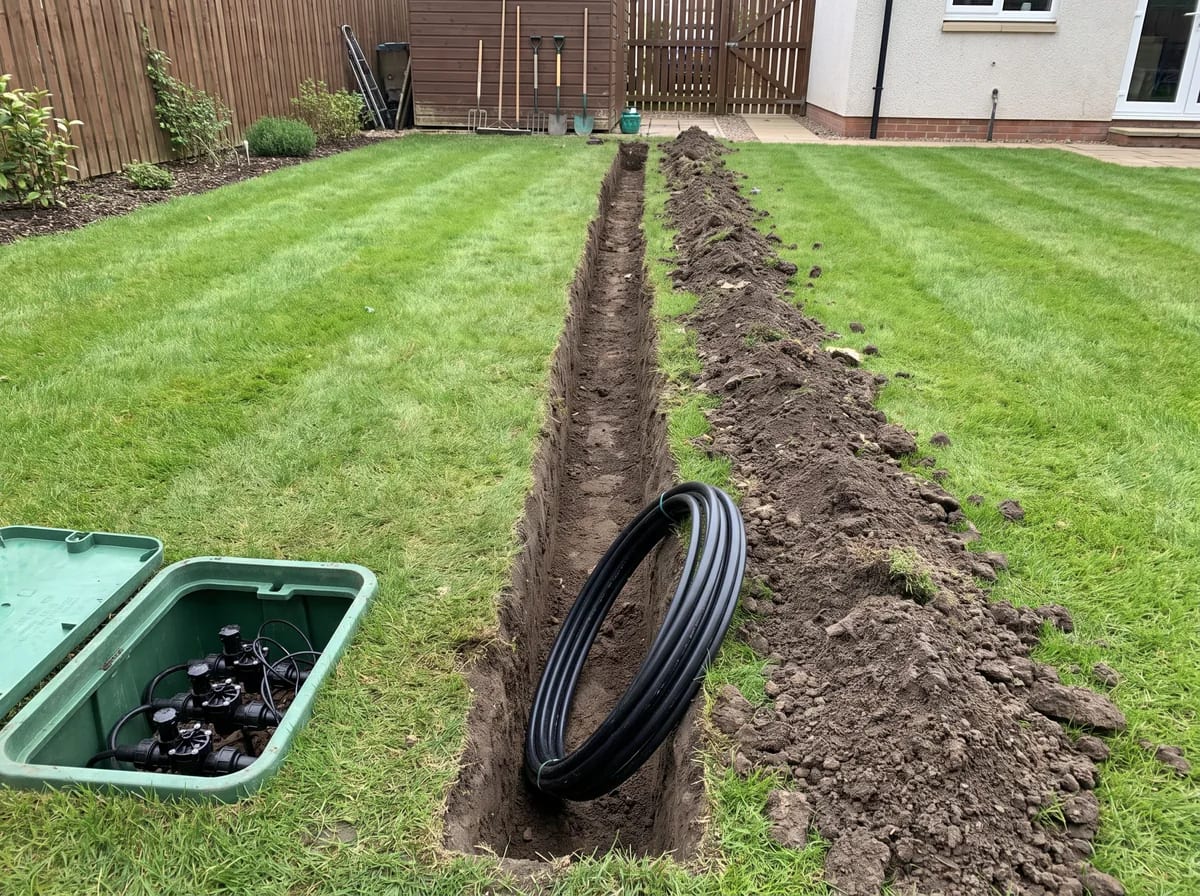
- Trenching and mainline, lateral and valve installation
- Head and nozzle selection with pressure regulation where needed
- Controller installation and initial seasonal programming
Scope varies between contractors. Use this as a baseline when comparing quotes, and ask what is included before agreeing to work.
Questions
Installation in Upper Mission
Would drip work for the ornamental beds on our sloped lot?
It is generally the better choice. Drip applies water slowly enough to be absorbed rather than shed, and it avoids the wind and evaporation losses that overhead spray suffers on an exposed bench. Many Upper Mission properties end up with a hybrid system: rotors on turf, drip on beds and slopes.
How many zones does a property need?
It is set by available flow, not by property size. Each zone can only run as many heads as your water supply can serve at their designed pressure, so a property with modest flow needs more, smaller zones than one with strong supply. Planting matters too: turf, shrub beds and trees should be on separate zones because their water needs genuinely differ. A measured flow test at the property is the only way to answer this properly.
How long does installation take?
For a typical residential property, most installations run one to three days once scheduled — a day of trenching and pipe, then heads, valves, controller and commissioning. Larger or acreage properties with long runs, high zone counts or pump work take longer. The lead time before starting is usually the bigger factor, particularly in spring.
Should new beds use drip instead of sprinklers?
In most cases yes, and it is worth specifying at design stage rather than retrofitting later. Drip delivers water at the root zone with far less evaporation and no overspray, which suits shrubs, perennials and trees. Turf still needs overhead coverage. Most well-designed modern systems are hybrids: rotors or sprays on lawn, drip on beds, each on their own zones and schedules.
Free, no obligation
Compare installation quotes for your property
Tell us what your property needs. We pass the details to an independent irrigation contractor serving your area, and they contact you directly.
Prefer email?
Send the details to quotes@kelownairrigation.ca and we route it to the right contractor.
Email quotes@kelownairrigation.caNearby areas
Installation in neighbouring communities.
- Kettle ValleyPlanned hillside community on the Upper Mission bench, with moderate grades and a compact street layout.
- Crawford EstatesEstablished hillside area on the southern Kelowna bench with larger sloped lots and mature planting.
- Lower MissionFlat, low-lying land close to Okanagan Lake with deep soil and a high water table in places.
- Installation in South East KelownaRolling agricultural benchland on Kelowna's southeastern edge, rising toward the surrounding hills.
Related services
Often requested alongside installation.
- Drip IrrigationLow-volume systems delivering water at the root zone — the efficient choice for beds, slopes, trees and xeriscaping.
- Sprinkler RepairDiagnosis and repair of broken heads, leaking valves, wiring faults and zones that will not run.
- Backflow TestingTesting and certification of backflow prevention devices protecting drinking water from irrigation systems.
Free quote requests
Compare installation quotes for your property
Tell us what the job involves and we will pass it to an independent irrigation contractor working in your area. Free to request, and you are under no obligation to go ahead.