South East Kelowna · Acreage & semi-rural properties
New Irrigation Systems for South East Kelowna Properties
Acreage installs are dominated by distance. Friction loss over long mainline runs, total available flow from a well or agricultural connection, and the number of zones needed to stay inside that flow drive every decision — usually toward larger pipe and more zones than owners expect.
A new system starts with two measurements — available pressure and available flow — because everything else about the design follows from them. Irrigation in South East Kelowna is usually a production question as well as a landscaping one — which shapes what installation work here usually involves.
Commonly requested here
Installation work on South East Kelowna properties
- Mainline sizing calculated for friction loss over distance
- Pump and pressure-tank selection matched to system demand
- Source-appropriate filtration designed in from the start
- High zone counts staged within available sustained flow
- Separate zones for turf, garden, shelterbelt and production planting
Worth knowing
Well-fed systems must be designed to the well's sustained yield, not its peak. Designing beyond it causes pump cycling, pressure loss and eventually pump failure — the most expensive mistake available on an acreage install.
Issues that come up in South East Kelowna
- Very long mainline runs where friction loss dominates system design
- High zone counts that must be staged within the available flow
- Agricultural and domestic watering needs sharing one supply
Local context
- South East Kelowna is among the Central Okanagan's most productive agricultural areas, with substantial orchard and vineyard acreage alongside rural residential parcels.
- The area was historically served by the South East Kelowna Irrigation District, and agricultural supply arrangements remain relevant to how properties are watered.
- Parcels back onto the Myra-Bellevue and Gallagher's Canyon areas, where terrain rises and runs get longer.
Some of the region's most productive agricultural land, where irrigation is tied to crop requirements and seasonal supply rather than lawn appearance alone.
What to expect
Typically part of the job
- High zone counts staged within available sustained flow
- Separate zones for turf, garden, shelterbelt and production planting
- Mainline sizing calculated for friction loss over distance
- Site assessment with static pressure and flow rate measurement
- Zone plan matched to planting type, sun exposure and grade
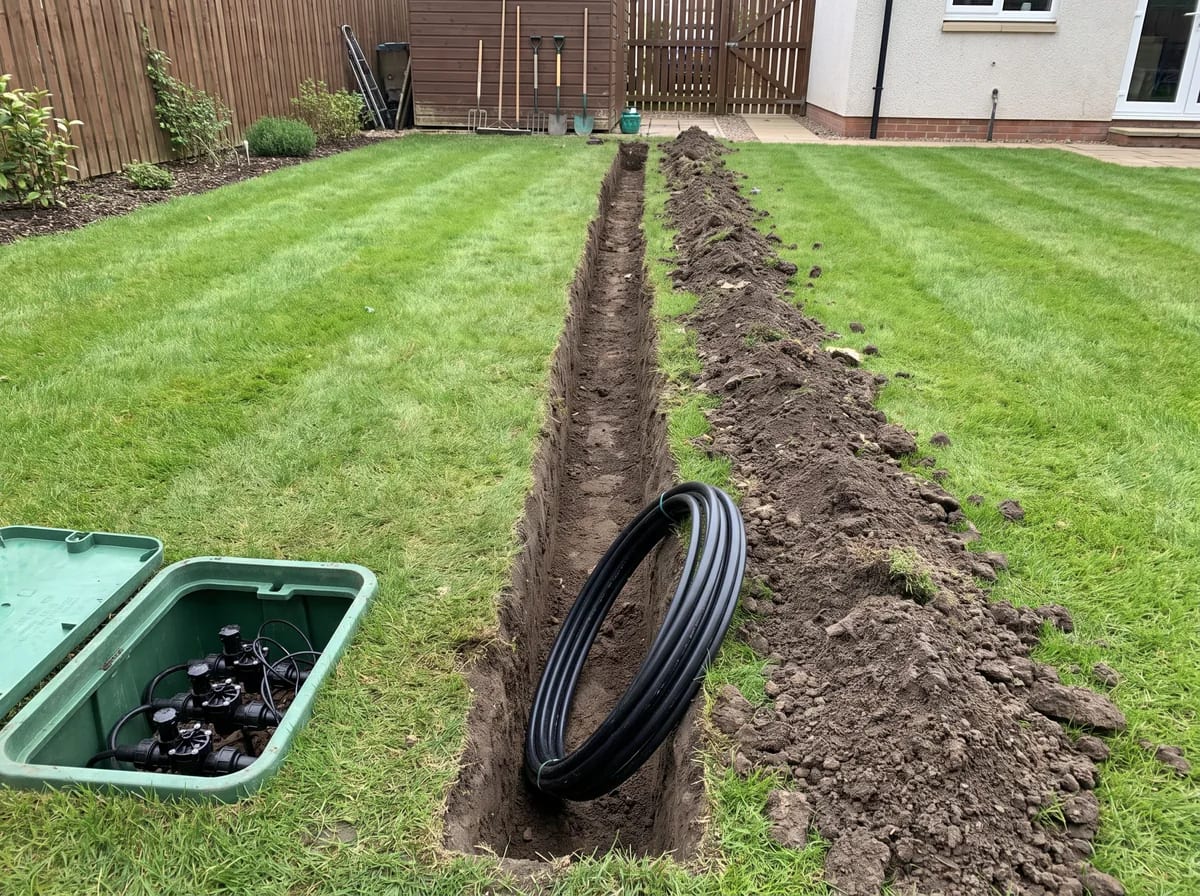
- Trenching and mainline, lateral and valve installation
Scope varies between contractors. Use this as a baseline when comparing quotes, and ask what is included before agreeing to work.
Questions
Installation in South East Kelowna
How many zones does a property need?
It is set by available flow, not by property size. Each zone can only run as many heads as your water supply can serve at their designed pressure, so a property with modest flow needs more, smaller zones than one with strong supply. Planting matters too: turf, shrub beds and trees should be on separate zones because their water needs genuinely differ. A measured flow test at the property is the only way to answer this properly.
How long does installation take?
For a typical residential property, most installations run one to three days once scheduled — a day of trenching and pipe, then heads, valves, controller and commissioning. Larger or acreage properties with long runs, high zone counts or pump work take longer. The lead time before starting is usually the bigger factor, particularly in spring.
Should new beds use drip instead of sprinklers?
In most cases yes, and it is worth specifying at design stage rather than retrofitting later. Drip delivers water at the root zone with far less evaporation and no overspray, which suits shrubs, perennials and trees. Turf still needs overhead coverage. Most well-designed modern systems are hybrids: rotors or sprays on lawn, drip on beds, each on their own zones and schedules.
Will the lawn be wrecked by trenching?
Less than most people expect. Installers generally use a trencher or a vibratory plough that slices a narrow channel rather than excavating a wide one, and on established turf the lines usually knit closed within a few weeks in growing season. Ask how the contractor handles reinstatement, and if timing is flexible, avoid peak summer heat.
Free, no obligation
Request a installation quote
Tell us what your property needs. We pass the details to an independent irrigation contractor serving your area, and they contact you directly.
Prefer email?
Send the details to quotes@kelownairrigation.ca and we route it to the right contractor.
Email quotes@kelownairrigation.caNearby areas
Installation in neighbouring communities.
- Joe RichRural forested valley east of Kelowna along the Highway 33 corridor, at noticeably higher elevation than the city.
- Crawford EstatesEstablished hillside area on the southern Kelowna bench with larger sloped lots and mature planting.
- Installation in Upper MissionElevated benchland and hillside rising steeply above Lower Mission, with sustained grades and long lake views.
- Black MountainElevated slopes on Kelowna's eastern edge, rising toward the Highway 33 corridor.
Related services
Often requested alongside installation.
- Drip IrrigationLow-volume systems delivering water at the root zone — the efficient choice for beds, slopes, trees and xeriscaping.
- Sprinkler RepairDiagnosis and repair of broken heads, leaking valves, wiring faults and zones that will not run.
- Backflow TestingTesting and certification of backflow prevention devices protecting drinking water from irrigation systems.
Free quote requests
Request a installation quote
Tell us what the job involves and we will pass it to an independent irrigation contractor working in your area. Free to request, and you are under no obligation to go ahead.