Wilden · Hillside & benchland properties
Wilden Drip Irrigation Quotes
On dry, sloped or rock-mulched ground, overhead spray loses much of its water to evaporation and runoff before it reaches a root. Drip does not.
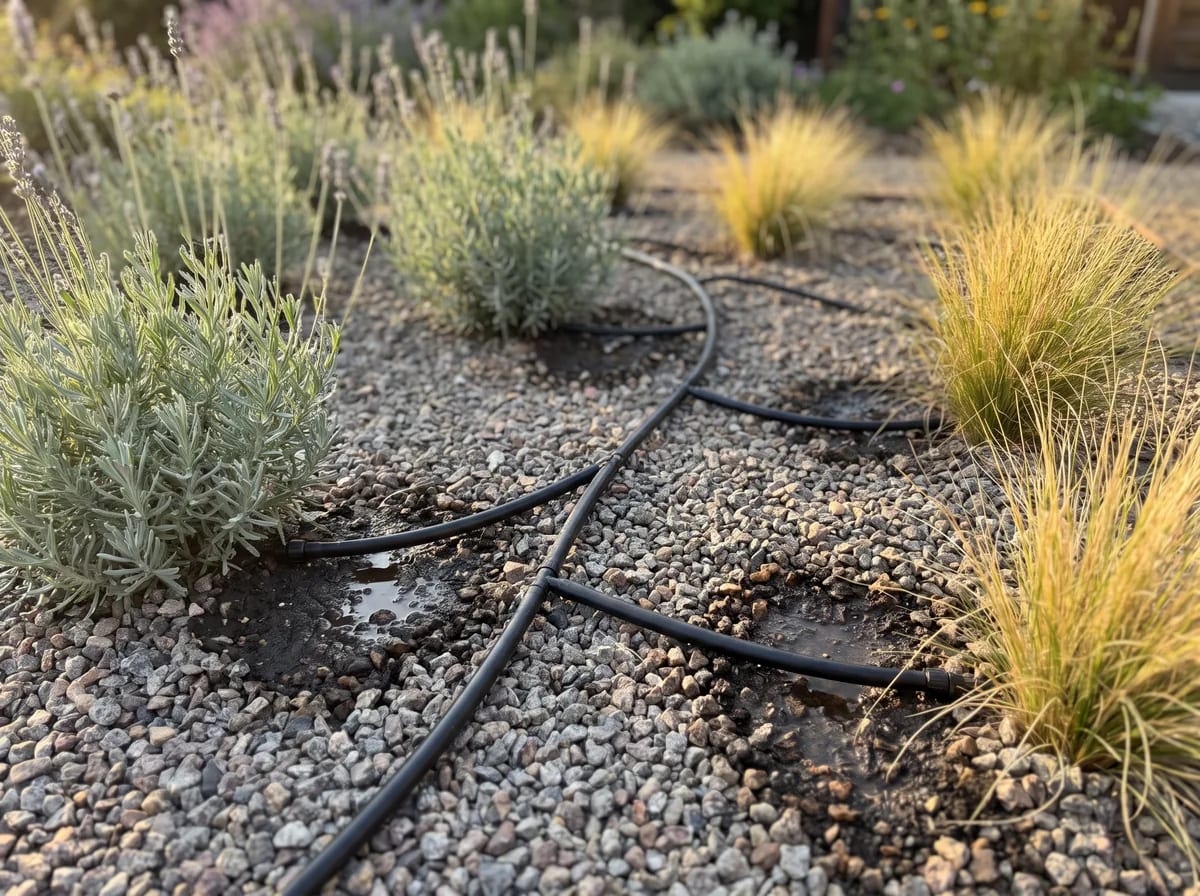
Hillside properties are where drip earns its keep most clearly. Thin soil over rock holds very little water, steep grades shed anything applied quickly, and rock mulch drives surface evaporation up — three problems that low-volume root-zone delivery addresses simultaneously.
Commonly requested here
Drip irrigation work on Wilden properties
- Converting terraced and rock-mulched beds from spray to drip
- Emitters sized individually for established trees and shrubs
- Short frequent cycles suited to shallow soil over bedrock
- Pressure regulation across drip zones spanning elevation
- Dedicated drip zones separated from turf schedules
Worth knowing
Where soil over bedrock is shallow, run frequency matters more than duration. A long cycle simply drains past the root zone, so short frequent applications keep the small available soil volume in range.
Issues that come up in Wilden
- Rock mulch increasing surface temperature and evaporation around plantings
- Substantial elevation change within single zones demanding pressure regulation
- Naturalised planting poorly matched to conventional turf spray zones
Local context
- Wilden was developed with deliberate retention of the natural hillside landscape, so rock outcrop and native planting are defining features rather than exceptions.
- Slopes are steep and soil depth over bedrock is limited across much of the neighbourhood.
- Naturalised and xeriscaped planting dominates, with turf typically confined to small defined areas.
Rock and thin soil heat up quickly and hold little moisture, so plantings in Wilden depend on frequent, precisely targeted delivery rather than volume.
What to expect
Typically part of the job
- Converting terraced and rock-mulched beds from spray to drip
- Dedicated drip zones separated from turf schedules
- Pressure regulation across drip zones spanning elevation
- Emitter selection and placement matched to each plant type
- Assessment of which areas suit drip conversion
- Flush point installation for seasonal maintenance
Scope varies between contractors. Use this as a baseline when comparing quotes, and ask what is included before agreeing to work.
Questions
Drip irrigation in Wilden
How long should drip zones run?
Considerably longer than spray zones and much less often, because emitters deliver very low volumes. Where a spray zone might run fifteen minutes several times a week, a drip zone may run an hour or more, once or twice weekly, depending on soil, planting and season. The aim is deep, infrequent watering that encourages roots downward.
Can existing spray zones be converted to drip?
Usually yes, and it is a common upgrade. Conversion typically keeps the existing valve and buried lateral, adding a pressure regulator and filter at the zone and running drip line through the bed from there. The important part is that converted zones need their own schedule — drip runs longer and less often than spray — so they should not stay grouped with turf on the same programme.
How do you irrigate over bedrock and shallow soil?
By watering more often and much more lightly, and by targeting individual plants rather than areas. Where soil depth is limited, a long cycle simply runs past the root zone and is wasted. Drip lines with emitters sized to each plant, run on short frequent cycles, keep the small available soil volume in the right moisture range.
Why is drip irrigation such a strong fit for Wilden properties?
Because it solves three Wilden problems at once. Thin soil over rock cannot hold a large volume, so slow delivery is essential; steep grades shed anything applied quickly; and rock mulch drives evaporation up, which overhead spray suffers from and subsurface drip largely avoids. Drip delivers small amounts directly to root zones, which is what naturalised hillside planting actually needs.
Free, no obligation
Ask about converting Wilden beds to drip
Tell us what your property needs. We pass the details to an independent irrigation contractor serving your area, and they contact you directly.
Prefer email?
Send the details to quotes@kelownairrigation.ca and we route it to the right contractor.
Email quotes@kelownairrigation.caNearby areas
Drip irrigation in neighbouring communities.
- GlenmoreA broad valley running north from downtown, flat through the centre with slopes rising on both sides.
- McKinley LandingSteep lakeside hillside north of Kelowna, dropping sharply toward Okanagan Lake.
- Drip irrigation in Dilworth MountainA distinct hill rising between Glenmore and Rutland, with terraced lots and substantial elevation change street to street.
- University DistrictGently rolling land in Kelowna's north, around the UBC Okanagan campus and Quail Ridge.
Related services
Often requested alongside drip irrigation.
- Irrigation InstallationDesign and installation of new in-ground irrigation systems, zone expansions and full replacements.
- Sprinkler RepairDiagnosis and repair of broken heads, leaking valves, wiring faults and zones that will not run.
- Spring Start-UpRecommissioning your system after winter — pressurising safely, testing every zone and setting the season's schedule.
Free quote requests
Ask about converting Wilden beds to drip
Tell us what the job involves and we will pass it to an independent irrigation contractor working in your area. Free to request, and you are under no obligation to go ahead.