Lower Mission · Established residential neighbourhoods
Sprinkler Winterization for Lower Mission Properties
On established systems the most common blowout problem is incomplete knowledge. Decades of modifications leave zones and valve boxes that nobody has documented, and a zone nobody knew about is a zone that does not get cleared.
Draining a system does not empty it. Low points and laterals hold water whatever the grade, which is why compressed air is the only reliable way to clear a system. Flat Lower Mission lots hold moisture far better than the benches above them, and schedules rarely reflect it — which shapes what winterization work here usually involves.
Commonly requested here
Winterization work on Lower Mission properties
- Locating valve boxes buried under years of lawn build-up
- Confirming the full zone count against the controller
- Clearing older laterals with care at reduced pressure
- Draining and protecting ageing backflow assemblies
- Documenting the system layout for future years
Worth knowing
Older fittings and brittle risers do not tolerate the pressures newer components handle. Reducing air pressure and accepting a longer clearing time avoids turning winterization into a repair job.
Issues that come up in Lower Mission
- Overwatering on flat, moisture-retentive ground producing shallow roots and thatch
- Original 1970s and 80s systems with brittle, sun-damaged risers and fittings
- Valve diaphragms and solenoids at the end of their service life causing weeping or non-firing zones
Local context
- Lower Mission's proximity to Okanagan Lake and its beaches means flat, deep soils that hold moisture longer than benchland properties.
- Mission Creek runs through the area, and nearby properties can sit on ground with a seasonally higher water table.
- The neighbourhood's high renovation rate means irrigation zones frequently no longer match current planting layouts.
Proximity to the lake moderates temperature slightly and the flat, deep soil retains moisture well, so Lower Mission properties usually need less frequent watering than the benches above them.
What to expect
Typically part of the job
- Draining and protecting ageing backflow assemblies
- Documenting the system layout for future years
- Locating valve boxes buried under years of lawn build-up
- Mainline clearing to the isolation point
- Backflow assembly draining and protection
- Draining of any pump, pressure tank and filtration
Scope varies between contractors. Use this as a baseline when comparing quotes, and ask what is included before agreeing to work.
Questions
Winterization in Lower Mission
What is an irrigation blowout?
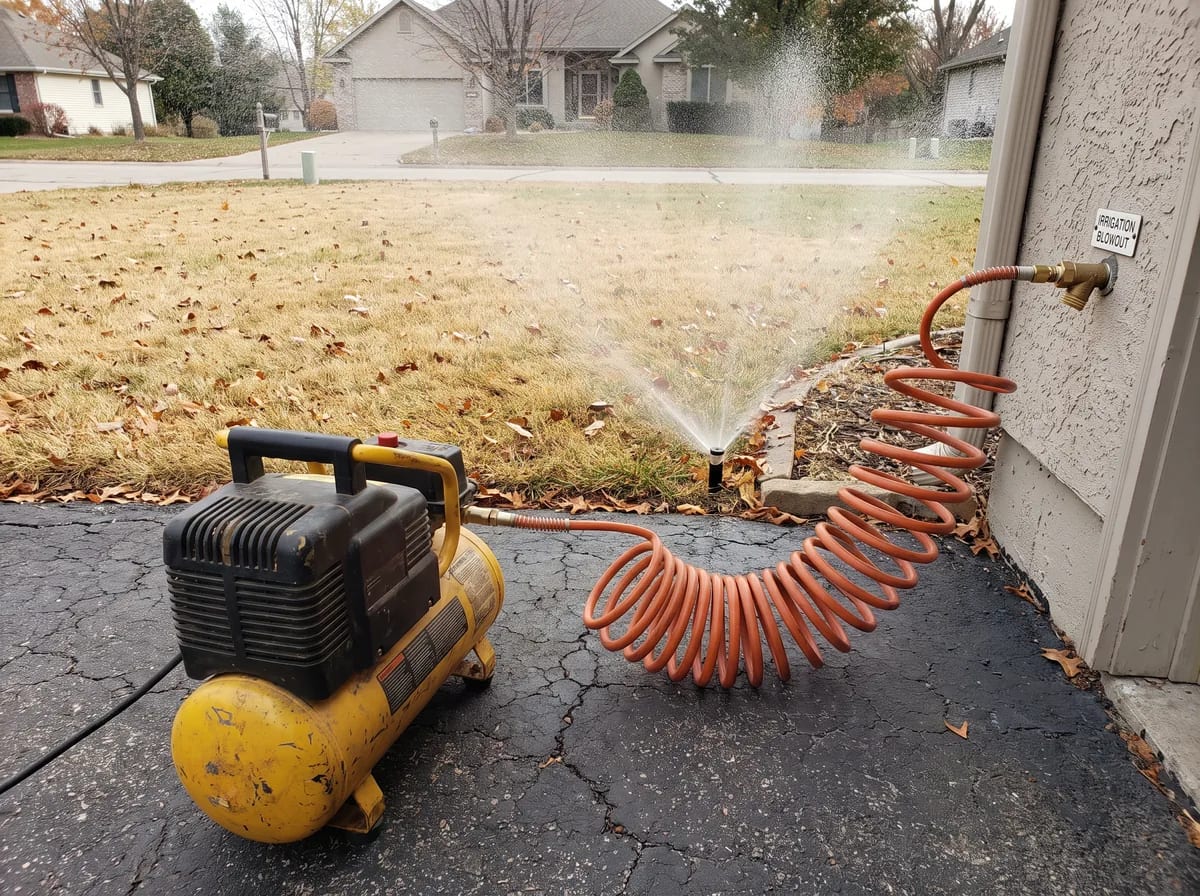
An irrigation blowout is the process of forcing compressed air through an irrigation system to push out every bit of water left in the pipes, valves and sprinkler heads before winter. A contractor shuts off and isolates the water supply, connects a compressor at the blowout port, then opens each zone in turn until only air and mist come out of the heads. It is done because water expands as it freezes, and buried pipe is the most expensive possible place to discover that.
What does an irrigation blowout cost in the Okanagan?
We do not publish prices, because the work is quoted by independent contractors and the number depends on the property. The things that move it most are the number of zones, the length of mainline, whether there is a pump, filtration or an above-ground backflow assembly to drain, how accessible the blowout port and valve boxes are, and how late in the season you book. Requesting two or three quotes is the reliable way to find out what your system should cost, which is what this service is for.
When should an irrigation system be blown out?
Before the first hard frost, which in the Central Okanagan valley usually means sometime in October — earlier at elevation. Because being early has no downside once you have stopped watering and being late risks cracked pipe, the sensible approach is to book toward the early end of the window rather than waiting for cold weather to force the decision.
Can I just drain the system instead?
Draining alone is not sufficient on most systems. Even with drain valves and favourable grade, laterals and low points retain water that gravity will not remove, and it only takes a small amount in the wrong place to crack a fitting or a valve body. Compressed air is used because it clears water that draining leaves behind.
Free, no obligation
Get quotes to winterize your system
Tell us what your property needs. We pass the details to an independent irrigation contractor serving your area, and they contact you directly.
Prefer email?
Send the details to quotes@kelownairrigation.ca and we route it to the right contractor.
Email quotes@kelownairrigation.caNearby areas
Winterization in neighbouring communities.
- Upper MissionElevated benchland and hillside rising steeply above Lower Mission, with sustained grades and long lake views.
- Winterization in Kettle ValleyPlanned hillside community on the Upper Mission bench, with moderate grades and a compact street layout.
- South East KelownaRolling agricultural benchland on Kelowna's southeastern edge, rising toward the surrounding hills.
- Springfield / SpallFlat central Kelowna land close to the city's commercial core.
Related services
Often requested alongside winterization.
- Spring Start-UpRecommissioning your system after winter — pressurising safely, testing every zone and setting the season's schedule.
- Sprinkler RepairDiagnosis and repair of broken heads, leaking valves, wiring faults and zones that will not run.
- Backflow TestingTesting and certification of backflow prevention devices protecting drinking water from irrigation systems.
Free quote requests
Get quotes to winterize your system
Tell us what the job involves and we will pass it to an independent irrigation contractor working in your area. Free to request, and you are under no obligation to go ahead.