Ellison · Acreage & semi-rural properties
Drip Irrigation in Ellison
On acreages drip covers a wider brief: not just ornamental beds but shelterbelts, garden rows and often production planting. Filtration becomes the central engineering concern because these properties usually draw from a well, creek or agricultural connection.
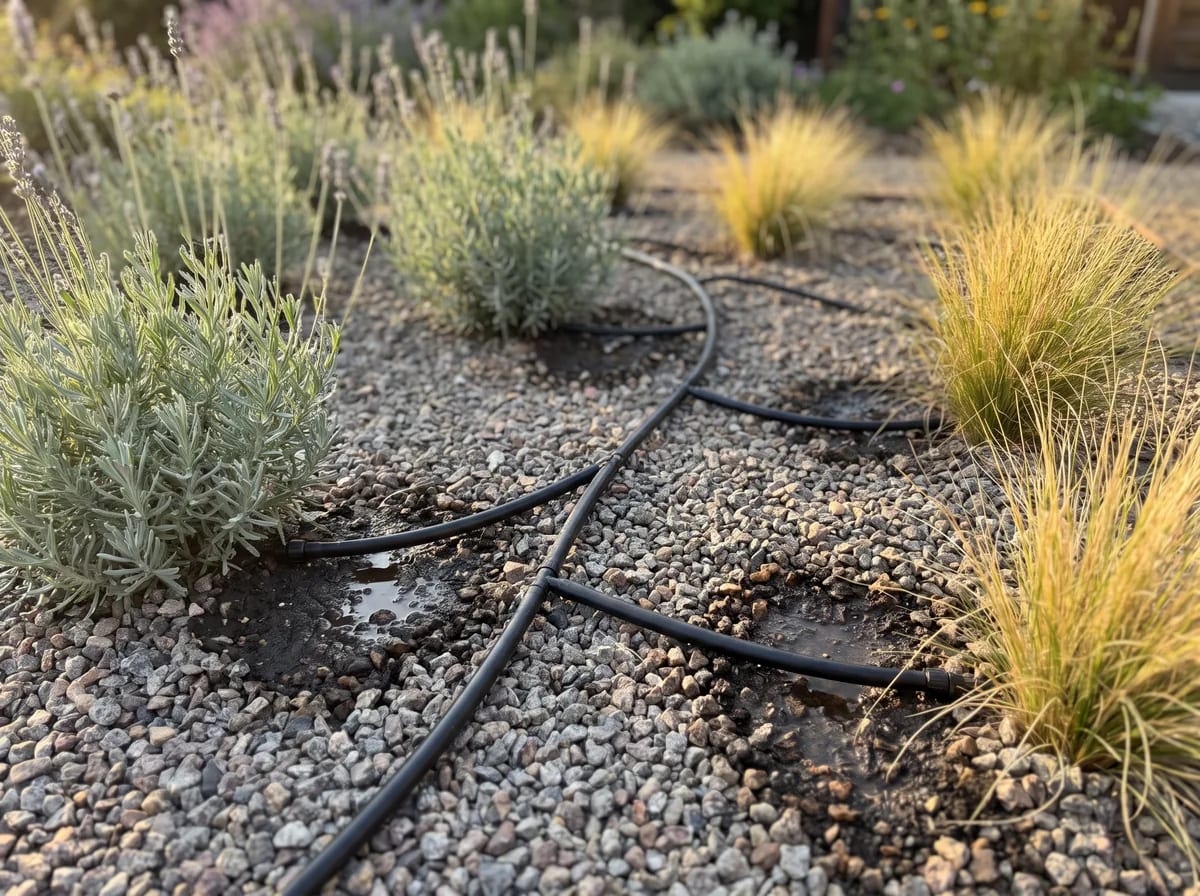
Drip puts water at the root zone slowly enough for soil to absorb it, which is why it outperforms spray on nearly everything except lawn. Ellison properties are large enough that pipe sizing and friction loss decide whether a system works — which shapes what drip irrigation work here usually involves.
Commonly requested here
Drip irrigation work on Ellison properties
- Drip lines for shelterbelts, orchard rows and garden beds
- Filtration sized properly for well or surface sources
- Zone layouts covering long planted runs within available flow
- Separate scheduling for production versus ornamental planting
- Flush points positioned for practical seasonal maintenance
Worth knowing
Filtration is what determines whether a rural drip system lasts. Emitter openings are the smallest passage in the system, and unfiltered well or surface water will find them within a season.
Issues that come up in Ellison
- Mixed pasture, turf, garden and tree watering needs on one system
- Long mainline runs where friction loss materially reduces pressure at the far end
- Zone counts exceeding what the original controller can operate
Local context
- Ellison sits north of Kelowna International Airport in a genuinely semi-rural setting, with parcel sizes well above the city average.
- Parts of the area fall under the Glenmore–Ellison Improvement District, and some properties draw on wells rather than a distribution system.
- Open, exposed terrain around Ellison Lake makes wind drift a practical design consideration on large turf and pasture areas.
Open, exposed rural land north of the airport sees strong wind, which pushes spray off target and increases evaporation losses on large open areas.
What to expect
Typically part of the job
- Flush points positioned for practical seasonal maintenance
- Drip lines for shelterbelts, orchard rows and garden beds
- Filtration sized properly for well or surface sources
- Emitter selection and placement matched to each plant type
- Pressure regulation and filtration appropriate to the source
- Distribution and drip line layout with secure fittings
Scope varies between contractors. Use this as a baseline when comparing quotes, and ask what is included before agreeing to work.
Questions
Drip irrigation in Ellison
Can one controller run a system with a lot of zones?
Only up to its station count, and acreage systems regularly exceed what an older residential controller supports. The options are a larger controller, expansion modules if the unit accepts them, or splitting the property across more than one controller. Available flow matters just as much: zones have to be staged so you never demand more water at once than the source can deliver.
Can existing spray zones be converted to drip?
Usually yes, and it is a common upgrade. Conversion typically keeps the existing valve and buried lateral, adding a pressure regulator and filter at the zone and running drip line through the bed from there. The important part is that converted zones need their own schedule — drip runs longer and less often than spray — so they should not stay grouped with turf on the same programme.
How long should drip zones run?
Considerably longer than spray zones and much less often, because emitters deliver very low volumes. Where a spray zone might run fifteen minutes several times a week, a drip zone may run an hour or more, once or twice weekly, depending on soil, planting and season. The aim is deep, infrequent watering that encourages roots downward.
Do drip systems clog?
They can, and it is the main maintenance consideration. Emitter openings are small, so anything in the water eventually finds them — which is why proper filtration is not optional, particularly on well, lake or agricultural supply. With a correctly sized filter, seasonal flushing and filter cleaning, clogging is a manageable routine rather than a recurring failure.
Free, no obligation
Request a drip irrigation quote
Tell us what your property needs. We pass the details to an independent irrigation contractor serving your area, and they contact you directly.
Prefer email?
Send the details to quotes@kelownairrigation.ca and we route it to the right contractor.
Email quotes@kelownairrigation.caNearby areas
Drip irrigation in neighbouring communities.
- GlenmoreA broad valley running north from downtown, flat through the centre with slopes rising on both sides.
- University DistrictGently rolling land in Kelowna's north, around the UBC Okanagan campus and Quail Ridge.
- RutlandPredominantly flat to gently sloping valley floor with deep, workable soil.
- Black MountainElevated slopes on Kelowna's eastern edge, rising toward the Highway 33 corridor.
Related services
Often requested alongside drip irrigation.
- Irrigation InstallationDesign and installation of new in-ground irrigation systems, zone expansions and full replacements.
- Sprinkler RepairDiagnosis and repair of broken heads, leaking valves, wiring faults and zones that will not run.
- Spring Start-UpRecommissioning your system after winter — pressurising safely, testing every zone and setting the season's schedule.
Free quote requests
Request a drip irrigation quote
Tell us what the job involves and we will pass it to an independent irrigation contractor working in your area. Free to request, and you are under no obligation to go ahead.