Dilworth Mountain · Hillside & benchland properties
Irrigation Installation in Dilworth Mountain
Installing on a hillside lot is a hydraulics exercise before it is a trenching exercise. Zones need to be grouped by elevation band so heads within a zone see similar pressure, and application rates have to stay below what sloped ground can absorb.
The difference between an irrigation system that works and one that never quite does is almost always zone design rather than installation quality. On Dilworth, the difference between the top and bottom of your property is a hydraulic problem — which shapes what installation work here usually involves.
Commonly requested here
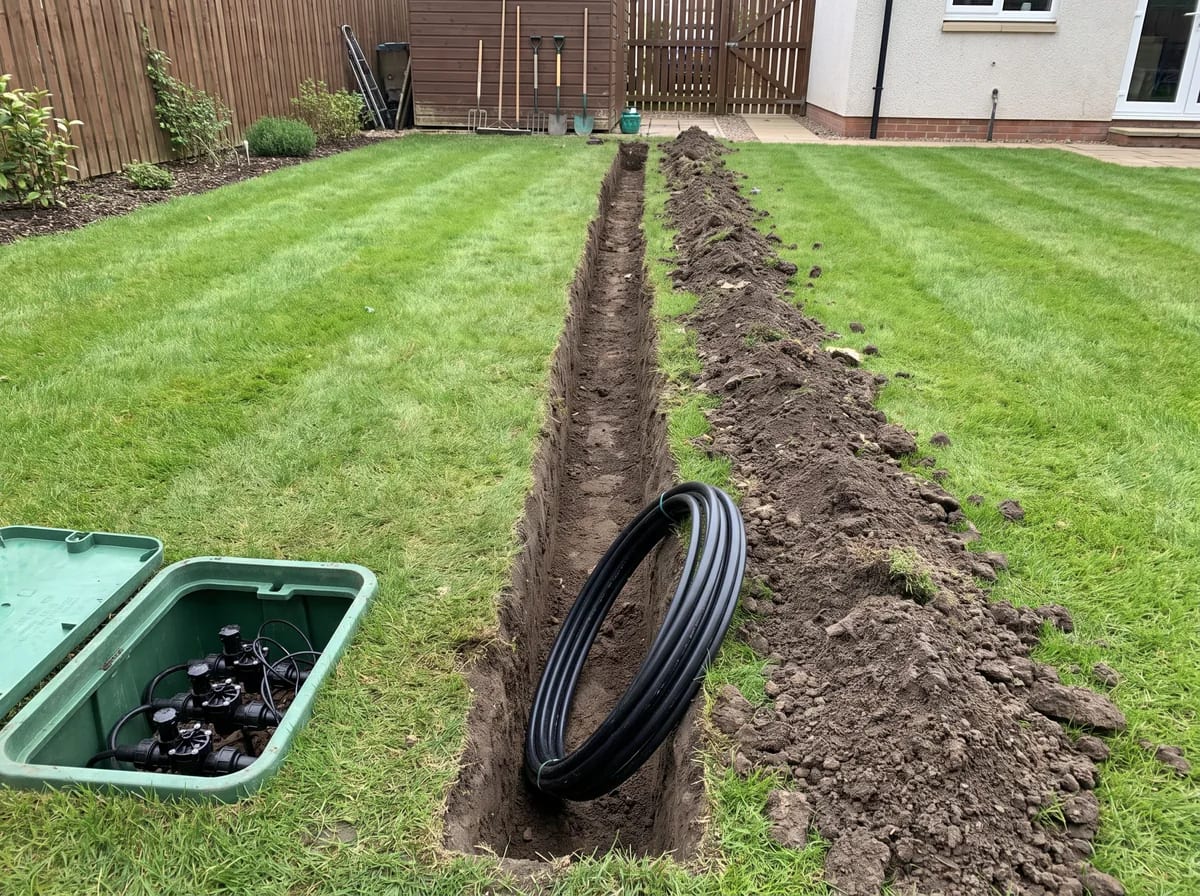
Installation work on Dilworth Mountain properties
- Zoning by elevation band rather than by convenience
- Pressure-regulated heads and valves throughout
- Drip on terraced and rock-mulched beds from the outset
- Check valves at low points to prevent between-cycle drainage
- Cycle-and-soak scheduling programmed at commissioning
Worth knowing
Grouping heads by elevation rather than by area is the single most important decision on a slope install. A zone spanning a large vertical range cannot be made to water evenly afterwards at any price.
Issues that come up in Dilworth Mountain
- Low-head drainage draining a whole zone out the lowest head after every cycle
- Thin soil over rock giving very little water-holding capacity
- Spray irrigation losing water to wind and evaporation on exposed upper slopes
Local context
- Elevation change within one Dilworth Mountain property is often enough to shift zone pressure noticeably between the highest and lowest head.
- Rock outcrop and shallow soil are common across the hill, which limits how much water the ground can hold at any one time.
- Terraced retaining-wall landscaping is widespread and generally suits drip or low-volume emitters better than overhead spray.
Exposed hillside position means more wind and stronger sun than the valley floor, and shallow soil over rock that dries out quickly after watering stops.
What to expect
Typically part of the job
- Check valves at low points to prevent between-cycle drainage
- Cycle-and-soak scheduling programmed at commissioning
- Zoning by elevation band rather than by convenience
- Head and nozzle selection with pressure regulation where needed
- Controller installation and initial seasonal programming
- Backflow prevention to purveyor requirements
Scope varies between contractors. Use this as a baseline when comparing quotes, and ask what is included before agreeing to work.
Questions
Installation in Dilworth Mountain
How many zones does a property need?
It is set by available flow, not by property size. Each zone can only run as many heads as your water supply can serve at their designed pressure, so a property with modest flow needs more, smaller zones than one with strong supply. Planting matters too: turf, shrub beds and trees should be on separate zones because their water needs genuinely differ. A measured flow test at the property is the only way to answer this properly.
How long does installation take?
For a typical residential property, most installations run one to three days once scheduled — a day of trenching and pipe, then heads, valves, controller and commissioning. Larger or acreage properties with long runs, high zone counts or pump work take longer. The lead time before starting is usually the bigger factor, particularly in spring.
Should new beds use drip instead of sprinklers?
In most cases yes, and it is worth specifying at design stage rather than retrofitting later. Drip delivers water at the root zone with far less evaporation and no overspray, which suits shrubs, perennials and trees. Turf still needs overhead coverage. Most well-designed modern systems are hybrids: rotors or sprays on lawn, drip on beds, each on their own zones and schedules.
Will the lawn be wrecked by trenching?
Less than most people expect. Installers generally use a trencher or a vibratory plough that slices a narrow channel rather than excavating a wide one, and on established turf the lines usually knit closed within a few weeks in growing season. Ask how the contractor handles reinstatement, and if timing is flexible, avoid peak summer heat.
Free, no obligation
Compare installation quotes for your property
Tell us what your property needs. We pass the details to an independent irrigation contractor serving your area, and they contact you directly.
Prefer email?
Send the details to quotes@kelownairrigation.ca and we route it to the right contractor.
Email quotes@kelownairrigation.caNearby areas
Installation in neighbouring communities.
- Installation in GlenmoreA broad valley running north from downtown, flat through the centre with slopes rising on both sides.
- Springfield / SpallFlat central Kelowna land close to the city's commercial core.
- Installation in WildenSteep, rocky hillside north of Glenmore where development deliberately retains natural landscape and outcrop.
- RutlandPredominantly flat to gently sloping valley floor with deep, workable soil.
Related services
Often requested alongside installation.
- Drip IrrigationLow-volume systems delivering water at the root zone — the efficient choice for beds, slopes, trees and xeriscaping.
- Sprinkler RepairDiagnosis and repair of broken heads, leaking valves, wiring faults and zones that will not run.
- Backflow TestingTesting and certification of backflow prevention devices protecting drinking water from irrigation systems.
Free quote requests
Compare installation quotes for your property
Tell us what the job involves and we will pass it to an independent irrigation contractor working in your area. Free to request, and you are under no obligation to go ahead.