Kelowna Watering Restrictions: Why Your Neighbour's Rules May Differ
Kelowna is served by several water purveyors, not one city-wide utility — which is why watering schedules and backflow rules vary by neighbourhood.
One of the more confusing things about irrigation in Kelowna is that two houses a few streets apart can be under genuinely different watering rules. This is not a quirk of enforcement. It is a consequence of how water is actually delivered here.
Kelowna is not served by a single water utility
The City of Kelowna water utility covers a large part of the city, but it is not the only purveyor. Improvement and irrigation districts — including Black Mountain, Glenmore–Ellison and Rutland Waterworks — serve other neighbourhoods, each setting its own schedules, conservation stages and requirements around backflow prevention.
Check your bill, not your neighbour
The quickest way to find out who supplies your water is to look at your utility billing. Whoever bills you sets the watering rules that apply to your address — and those are the rules your irrigation schedule has to fit.
West Kelowna and Lake Country differ again
West Kelowna's supply comes through several separate systems, a legacy of the irrigation districts the City amalgamated, so pressure characteristics and guidelines can vary between neighbourhoods there too. Lake Country adds a further wrinkle: parts of the District distribute separate domestic and agricultural supplies, and a property on an agricultural connection may face different seasonal availability, water quality and rates than one on domestic supply only.
Why this shapes system design, not just compliance
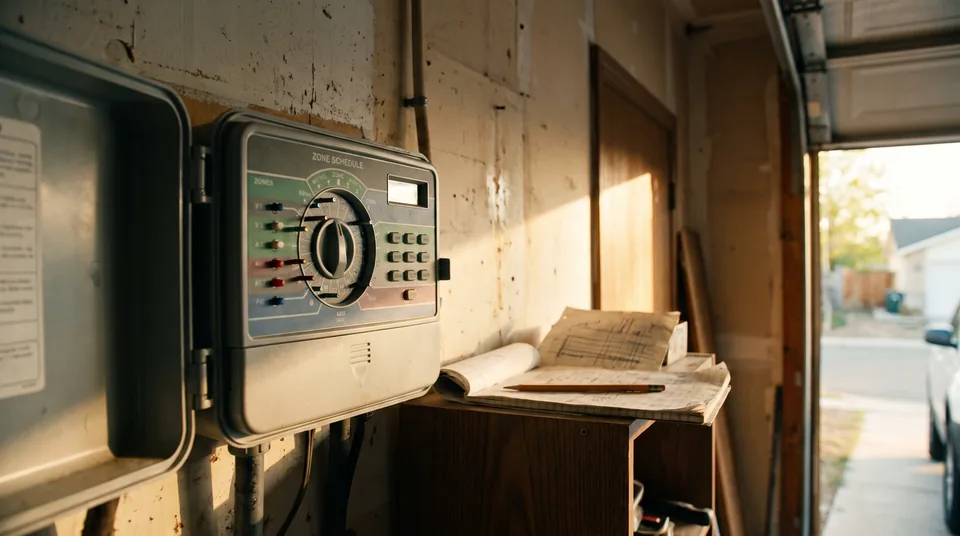
Restrictions are a design constraint, not just a rule to follow. If watering is limited to particular days or hours, every zone has to finish inside that window. Systems designed without accounting for it often physically cannot complete a full cycle legally — which is why the fix for a restricted schedule is usually more zones running shorter, not longer run times on fewer zones.
- Establish who supplies your water before programming anything.
- Confirm the current conservation stage — stages change between and within years.
- Total your zone run times and check they fit the permitted window.
- On agricultural supply, plan filtration for higher sediment loads.
- Ask your purveyor whether backflow testing is required for your device.
Getting more from less water
Restrictions tend to expose systems that were already inefficient. Watering deeply and less often encourages deeper roots and more drought-resilient turf than frequent shallow cycles. Converting garden beds to drip removes evaporation and overspray losses entirely. And on any sloped lot, splitting a long run into shorter cycles with soak time between them puts far more water into the root zone than a single long soak that mostly runs downhill.